
By Nikki Mercer, Research and Restoration Field Coordinator
As part of the San Diego River Park Foundation’s annual work on our El Capitan Mountain Preserve, our Land and Water Program and Research Program conduct photomonitoring to evaluate the health of the rare, native Lakeside ceanothus (Ceanothus cyaneus). This flowering shrub, with beautiful purple and blue flowers when in bloom, is crucial to our region’s biodiversity and provides critical shelter and food for pollinators, birds, and small mammals. But, unfortunately it is experiencing a lot of stress from various environmental impacts.
In 2024, our survey team found significant dieback of its population on the preserve, with more than half of individuals in our survey area dead or weakened. We observed low foliage, abnormal growth, discoloration, and wilting.
In response, SDRPF’s team mobilized an amazing group of partners including representatives from the San Diego Mitigation and Monitoring Program (SDMMP), San Diego Zoo Wildlife Alliance, U.S. Geological Service, U.S. Forest Service, the California Department of Fish and Wildlife, and a pathologist from UC Davis to find out the cause. It was concluded that this dieback was most likely the result of drought in combination with Botryosphaeriaceae, a fungal pathogen that causes disease in plants that are in stressed conditions.
Then, additional stress came to Lakeside ceanothus when the Monte Fire broke out in June 2025, and burned more than 233 acres of the El Capitan Preserve – nearly 40% of its total area. This rare species has a lot stacked up against it with the constant threats of drought, fungal pathogens, and wildfires, but our team continues to take action.
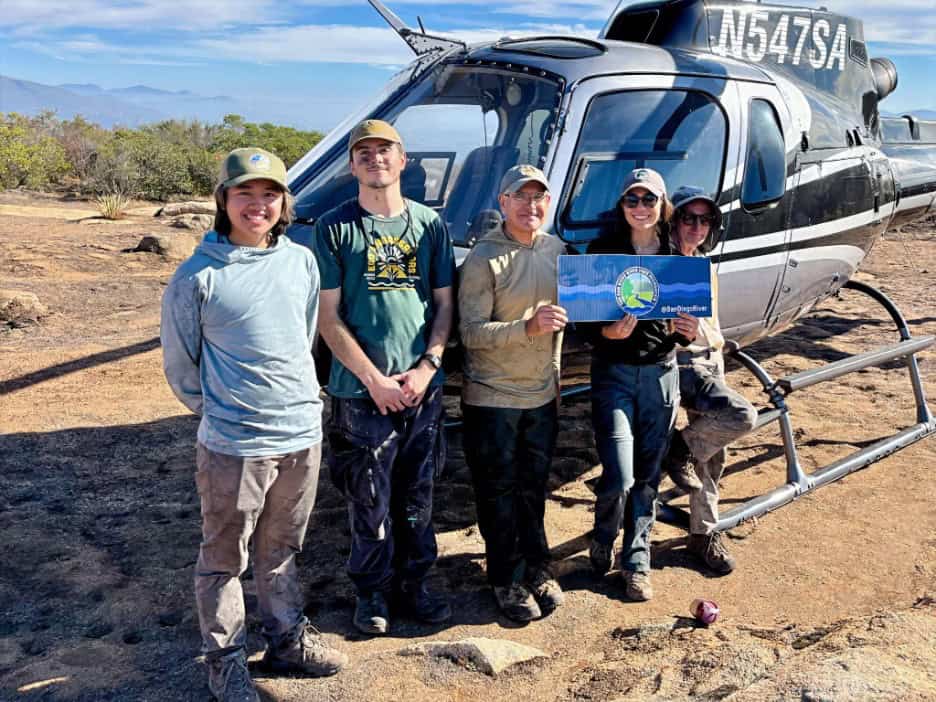
This fall, SDRPF staff, and volunteers collected data on Lakeside ceanothus by taking a helicopter to the top of El Capitan Preserve to survey the area after the fire. The results of the photomonitoring yielded some mixed results. Unfortunately, some of our existing populations burned in the Monte Fire with only remnant shrubs remaining and observed defoliation in surviving individuals. Additionally, we continue to see significant dieback, though it affects only part of the population. Encouragingly, several burned individuals are showing healthy new growth, indicating that population recovery may rely on the more resilient individuals.
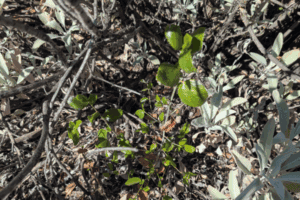
Lakeside ceanothus seedling at El Capitan Preserve in October 2025
It’s a delicate balance when attempting to manage and save this species. Lakeside ceanothus is adapted to wildfire, and fire can serve as an important trigger that kickstarts seed germination. In fact, prescribed fire is a potential management tool for creating a more diverse age structure that promotes reproduction, resilience, and resistance of the population. However, one of its main threats is increased fire frequency and intensity, which quickly depletes or eliminates the healthy soil seed bank.
In the meantime, SDRPF’s dedicated staff and volunteers will continue photomonitoring to track its health and quickly notify local or state experts if we observe any concerning changes, such as increased dieback. We will continue collaborating with our partners to expand research efforts and seed banking, to better understand and manage this rare and ecologically vital species to ensure its future on our preserve.
If you would like to join the effort to help save rare plant species like Lakeside ceanothus in our amazing San Diego River Watershed, email us at nikki@sandiegoriver.org to find out more information.